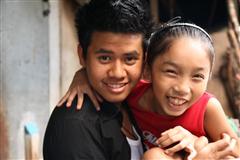
As the State of Israel about to deport foreign workers and their children – this film is a timely exploration of a complex political and personal situation. Where does identity come from? And what makes you connected to your homeland? Homecoming takes us on a moving journey with three teenagers who were born in Israel to foreign workers who came to Israel in search of a better life. These kids are not Jewish, but are deeply Israeli – and their individual journeys take on cultural and emotional dimensions. We travel with them to the Congo, to Peru and to the Philippines as they examine their roots and contemplate their future.
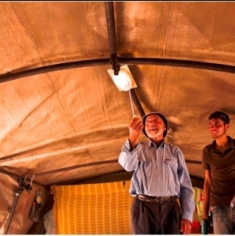
The Human Turbine is the story of an exciting encounter between Jewish academics Palestinian shepherds Susiya population – refugees deported three times already. Noam Dotan, child prodigy – a genius physicist and high tech; Uri Pinkerfeld, the Land of Israel and former senior government job; Ehud, Dr. history and Bible; Ariela, taking care of her profession – all adults, supervised illusions, political ideology great hope.
Every one of these individuals chose to give up the pleasures of life, a senior academic status, rank and promotion management positions. by joining forces chose to channel the knowledge, ingenuity and dreams, and harness the wind and the sun for renewable energy project in Susya, a project that aims to supply electricity to the residents who live without electricity in tents and caves. one after another It’s coming on The lights in tents, lighting and other life options bring the greatest light – milking Institute Susiya open to residents of new livelihoods, and economic independence.
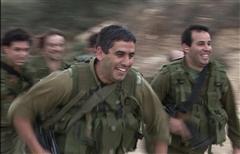
“A nation in Reserve” is a documentary series following a group of Israelis who once a year make the harsh transitions from civilian to military life and back. The series tells the story of members of an elite reserve unit from the moment they receive their call-ups and until they return home. Through the lives of his protagonists, the series’ director tries to trace the disappearing spirit of solidarity that once defined being an Israeli.
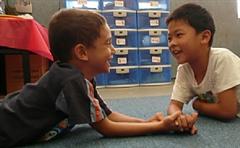
Second graders from diverse ethnic and religious backgrounds, in the center of Tel Aviv, contend with a stormy school year, of war and nationalistic currirulum.
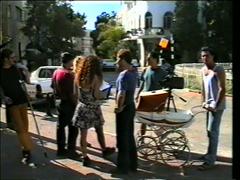
An amateur film crew shoots a scene on a quiet city street, when something quite out of the ordinary, taken from another film, happens… This is a film about a film about a film, which pays homage to several key films in the history of cinema.
An untold side of the Israeli-Palestinian Conflict: gay Palestinians — Louie, Abdu, and Fares — are hiding in Tel Aviv, and until they escape, they must remain “the invisible men.”
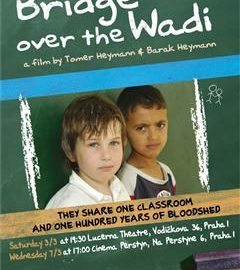
For the first time in Israel, a group of Arab and Jewish parents decide to establish a conjoint bi-national, bi-lingual school inside an Arab village. The film follows the school’s first year and portrays through the personal stories of its characters how complicated and fragile it is to create an environment of co-existence against the backdrop of the complicated reality around.
In May 2000, the South Lebanese Army (SLA) collapsed and its members fled in fear of Hezbollah fighters into Israel, their ally who had abandoned them. 700 families of SLA refugees remain in Israel today. Pierre and Massoud are sons of an SLA officer who brought his family to Israel when the two were boys. Pierre aspires to dedicate himself to the Lebanese music he loves, but he is forced to support his family instead. Massoud brings together a group of friends, all sons of former SLA fighters, and starts a basketball team called Erez Naharia (“Cedars of Naharia”). This is the story of children who were born in war-torn southern Lebanon and fled with their parents to Israel a story of youth and dreams in the shadow of war, betrayal and exile.
An Israeli Army officer remembers… A Palestinian remembers as well. This film is a voyage into the collective memory; a voyage rooted in stories of daily life.
Palestinian testimonies collected after the second Intifada revealed a harsh reality that, for Israelis, had always belonged to “them”, to the “others” – the Palestinians. And then, a few years later, the previously taboo accounts of Israeli officers who served during the Intifada began to emerge.
Memories of violence, of suffering, of humiliation. Of course, these stories matched. Israeli and Palestinian want to tell their stories each from their own point of view, as victim or victor, without seeing or acknowledging the reality of the other. But they are a single narrative. While these tales of terrible injustice are performed by Israeli actors, Shlomi Elkabetz’s film connects and unites both sides.