Ahead of his father’s release from prison, the virtual reality of the Parkour world in which Avshalom is a super hero, starts to crack. The inevitable upcoming showdown with the man he testified against, is going to dictate his mother’s fate
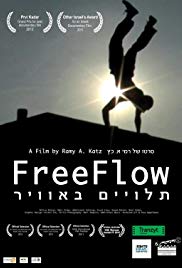
Ahead of his father’s release from prison, the virtual reality of the Parkour world in which Avshalom is a super hero, starts to crack. The inevitable upcoming showdown with the man he testified against, is going to dictate his mother’s fate
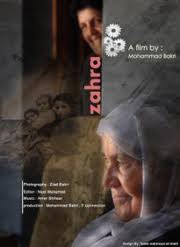
With touching personal style and breathtaking cinematography, Director Mohammad Bakri tells the story of his 78-year-old aunt Zahara, from the times of pre-state Israel to present, leading the family with love and wisdom through the many trials of life.
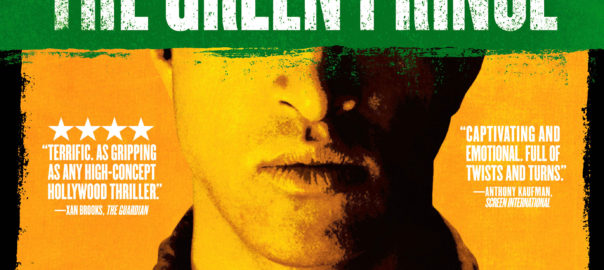
A Palestinian in Ramallah, Mosab Hassan Yousef grows up angry and ready to fight Israel. Arrested for smuggling guns at the age of 17, he’s interrogated by the Shin Bet, Israel’s security service, and sent to prison. But shocked by Hamas’s ruthless tactics in the prison and the organization’s escalating campaign of suicide bombings outside, Mosab agrees to spy for Israel. For him, there is no greater shame. For his Shin Bet handler, Gonen, there is no greater prize: “operating” the oldest son of a founding member of Hamas.
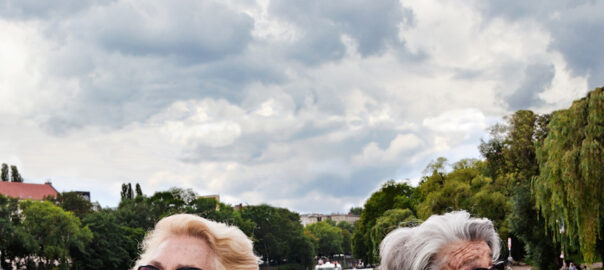
Oma and Bella is an intimate glimpse into the life of two dynamic elderly Jewish women in Berlin. The film follows them as make elaborate dishes recalled from their childhoods, before the Holocaust. Through the cooking of the sumptuous meals, they retain a part of their past past while remaining very much engaged in the present.
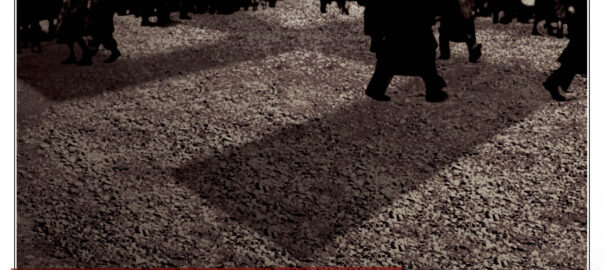
In 1942, the Nazi propaganda machine was hard at work. 70 years later, the deceit is finally unmasked.
Yael Hersonski’s powerful documentary achieves a remarkable feat through its penetrating look at another film: the now-infamous Nazi-produced film about the Warsaw Ghetto. Discovered after the war, the unfinished work—with no soundtrack—quickly became a resource for historians seeking an authentic record, despite its elaborate propagandistic construction. The later discovery of a long-missing reel complicated earlier readings, showing the manipulations of camera crews in these “everyday” scenes. Well-heeled Jews attending elegant dinners and theatricals (while callously stepping over the dead bodies of compatriots) now appeared as unwilling, but complicit, actors, alternately fearful and in denial of their looming fate.

Kabbalah Me follows a personal journey into the titular spiritual phenomenon of ancient tradition. Rooted in the Torah and Talmud, Kabbalah has been studied by leading Judaic scholars for many centuries. However, many Jews are unaware or uninformed about Kabbalah and its significance. The film tells the story of how co-director Steven Bram, feeling a spiritual void in his life, immerses himself into the world of Kabbalah.
Raised in New York as a secular Jew without much interest in organized religion, Steven grew up to lead a conventional life marrying a nice Jewish woman from the suburbs, fathering two beautiful daughters, living on the Upper West Side, and working at a sports/entertainment company. But after 9/11, he felt a longing for a deeper and more fulfilling spiritual life. This longing leads Steven on a five year journey that includes reconnecting with his Hasidic family members, studying with Judaic scholars, and a eventual pilgrimage to Israel – where he immerses himself in the history and traditions of the Holy Land and meets with charismatic Rabbis, Talmudic scholars and spiritual leaders.
As Steven’s spiritual journey progresses, the mystical and complex world of Kabbalah, with its varying interpretations and myriad rituals and lessons, slowly unfolds – which leads to profound changes in all aspects of his life.
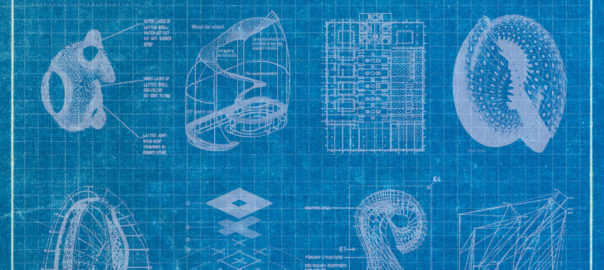
When best-selling author Joshua Foer (Moonwalking With Einstein) began to build his first sukkah—a small hut that Jews build and dwell in every fall for the holiday of Sukkot—he wanted to move beyond the generic plywood boxes and canvas tents that have become the unimaginative status quo. He discovered that while the bible outlines the basic parameters for what a sukkah should look like and how it should function, it leaves plenty of room for variation and interpretation. It is here Foer asks: what if contemporary architects and designers were challenged to design and construct twelve radical sukkahs? What would they come up with? Hence the design competition and exhibition known as “Sukkah City” was born.
In the vein of the Maysles Brothers documentation of architects Christo & Jean Claude, Sukkah City tracks the process of the competition and the minds behind it—from the start of jury day, which includes an all-star cast of architects, academics and critics (Thom Mayne, Paul Goldberger, Ron Arad) that debate the merits of the 600 submissions; to the construction, installation and exhibition of the twelve winning structures in New York City. The two-day exhibition drew a critical and popular response from some of the 200,000 attendees.
The film explores the artistic process of the architects, documenting how an ancient traditions can be reinvented for the 21st Century, and revealing the meaningful tale behind the innovative architecture.
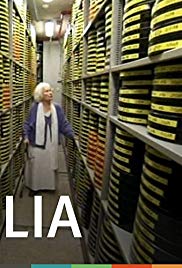
A cinematic portrait of Lia van Leer. Having developed her passion for cinema early on in the 1950s, she and her husband Wim began several film clubs and in 1960 founded the Israel Film Archive. These were followed by cinematheques in Haifa, Tel Aviv and Jerusalem as well as many other initiatives.

Can one be a Catholic priest and an observant Jew at the same time?
12 years after he was ordained as a Polish Catholic priest, Romuald Waszkinel discovers that he was born to Jewish parents, and that his name was Jacob Weksler.
The film follows his amazing journey: from conducting mass in a church in Poland to life as an observant Jew in a religious kibbutz in Israel. Romuald is torn between two identities, between being Romuald Waszkinel or Jacob Weksler. He is unable to renounce either, and therefore is rejected by both religions and the state of Israel. He is required to choose.

By age 14, he had written five novels and penned a diary about the Nazi occupation of Prague. By 16, he had produced 170 drawings and paintings, edited an underground magazine in the Jewish ghetto, and written numerous short stories. But by then, he had also walked to the gas chamber at Auschwitz.
Slight and stoop-shouldered, filled with intellectual curiosity but prone to mischief, Petr Ginz read voraciously, wrote constantly, developed cryptographs to record BBC broadcasts, built exploding toy cannons to frighten his classmates, and drew and painted a world full of adventure and exotic locations. In his novel, an allegory about Hitler, Petr wrote and illustrated the story of a giant robotic creature that is used by the government to terrorize the people. He ends the book with the warning: “Is it not possible that a new monster may appear on the surface of this earth, worse than this one–a monster that…will torture mankind in a terrible manner.”
Through Petr’s artwork, novels, short stories and magazine articles, interwoven with fantastical animation, this unconventional documentary portrait reveals his journey from precocious child to young adult, from innocence to the painful awareness of inhumanity, from gifted artist and writer to prodigy. Although Petr’s life ended at Auschwitz, it is not a story of tragedy but a celebration—a testament to how a boy’s wonder and creative expression represent the best of what makes us human.