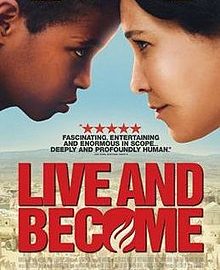
The year is 1984, and thousands of Africans from 26 different countries are struck by famine and flee to camps in Sudan. Israel and the United States begin a joint initiative to airlift thousands of Ethiopian Jews to Israel. Desperate to save her son from starvation and death, a Christian Ethiopian mother convinces her son to declare himself Jewish. Considered an orphan, the boy is adopted by a French Sephardi family that lives in Tel-Aviv. He grows up with the fear that his secrets and lies will be exposed: he is neither a Jew nor an orphan—only a little boy far from home.
For more information visit the Israel Film Center
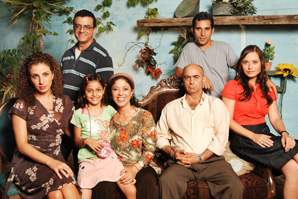
In contemporary Jerusalem, a small Jewish family leads an ordinary life until, after a car accident, the father mysteriously disappears. They all deal with his absence and the difficulties of everyday life as best they can. While the adults take refuge in silence or traditions, the two children, Menachem and David, seek their own way to find their father.
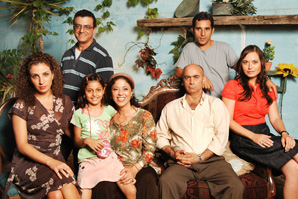
A slice of life, day after day, in Haifa, where Moshe and Didi’s marriage is on the rocks, Moshe’s affair with his mistress is going downhill, and his angst about health, his parents, sex, communication, and business dominate his life. He has many problems, to say the least: Moshe’s mother is Jewish and his father is an Arab who may or may not sell ancestral land; his wife and mistress have lovers, one of whom is a close friend; much of Moshe’s surroundings seem under construction or in renovation. As he becomes entangled in his confusing family relations and divided ancestry, he finds himself put to the test in ways that change his ordinary existence into something far more complicated.
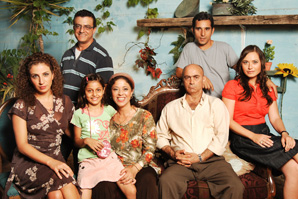
After spending 18 years in a heavily fortified mountain fortress deep in occupied Lebanon, the last group of Israeli soldiers enduring constant bombardment at Beaufort, a former stronghold of ancient crusaders, receives orders to abandon their post, detonate the bunkers in which they’ve tenuously clung to life and victory, and come home.
Amid increased shelling from Hezbollah, the fort’s brash, impossibly young commander Liraz (Oshri Cohen) struggles to keep himself and his men safe from a faceless enemy that would turn withdrawal into massacre and transform a just cause into a lost cause.
Academy Award® Nominee, Best Foreign Language Film.
Created by Sayed Kashua, a 32-year-old Israeli-born Palestinian journalist, Arab Labor (translated from the Hebrew “Avoda Aravit” which colloquially implies second-rate work) focuses on Amjad, a Palestinian journalist and Israeli citizen in search of his identity as he seeks high status in the society into which he was born but where his car is searched everyday when he drives from his neighborhood to his job at a newspaper in Jerusalem.
Episode 1: Amjad is stopped regularly on the road for a security check by police and does not understand why, because he thinks he looks like an average Israeli. Meir tells him that it is because the Subaru he drives is considered an Arab car. Amjad decides to trade in his Subaru and gets into trouble with the owners of the chop shop. Meanwhile, Amjad the journalist has to explain in the media why Arabs are involved in more traffic accidents.
For more information visit the Israel Film Center
Created by Sayed Kashua, a 32-year-old Israeli-born Palestinian journalist, Arab Labor (translated from the Hebrew “Avoda Aravit” which colloquially implies second-rate work) focuses on Amjad, a Palestinian journalist and Israeli citizen in search of his identity as he seeks high status in the society into which he was born but where his car is searched everyday when he drives from his neighborhood to his job at a newspaper in Jerusalem.
Episode 2: Amjad moves from the news desk to the magazine. The editor asks him for a colorful, sexy piece. Amjad is not sure what to write and deliberates over what to do, until he hears from his father about a very special sheep who understands what the soldiers say. Amjad makes up an interview with the sheep, and becomes a hot item on all of the local and international television networks. As he becomes famous for a false article, can he get himself out of this bind?
For more information visit the Israel Film Center
Created by Sayed Kashua, a 32-year-old Israeli-born Palestinian journalist, Arab Labor (translated from the Hebrew “Avoda Aravit” which colloquially implies second-rate work) focuses on Amjad, a Palestinian journalist and Israeli citizen in search of his identity as he seeks high status in the society into which he was born but where his car is searched everyday when he drives from his neighborhood to his job at a newspaper in Jerusalem.
Episode 3: Amjad understands that it is time for his parents to stop babysitting his daughter every day and for her to go to kindergarten and broaden her horizons. At first, he tries an Islamic kindergarten with a good reputation in the village. The little girl becomes religious, and Amjad decides to look for a strictly kosher Jewish kindergarten for her. He tries several options and encounters some unexpected difficulties.
For more information visit the Israel Film Center
Created by Sayed Kashua, a 32-year-old Israeli-born Palestinian journalist, Arab Labor (translated from the Hebrew “Avoda Aravit” which colloquially implies second-rate work) focuses on Amjad, a Palestinian journalist and Israeli citizen in search of his identity as he seeks high status in the society into which he was born but where his car is searched everyday when he drives from his neighborhood to his job at a newspaper in Jerusalem.
Episode 4: After Amjad and Meir interview the Arab Miss Israel, Amjad heads home while Meir stays back to take pictures. Riding back to the city alone, Meir believes he is being kidnapped by his Arab taxi driver and his cronies. The driver struggles to understand Meir’s pleas in Hebrew to spare his life, and thinks his erratic passenger needs to go to the bathroom. Meir calls on Amjad for help when his clueless driver “locks” him in an outhouse. Amjad and his father set out on a rescue mission to free Meir from his “kidnappers.”
For more information visit the Israel Film Center
Created by Sayed Kashua, a 32-year-old Israeli-born Palestinian journalist, Arab Labor (translated from the Hebrew “Avoda Aravit” which colloquially implies second-rate work) focuses on Amjad, a Palestinian journalist and Israeli citizen in search of his identity as he seeks high status in the society into which he was born but where his car is searched everyday when he drives from his neighborhood to his job at a newspaper in Jerusalem.
Episode 5: It is the week of Passover. Meir, Amjad’s coworker, meets with Amal, an attorney and friend of Bushra. He invites her to the Passover Seder. Amjad is also invited along with his wife and children to the home of a reform family whose son goes to kindergarten with Maya. Amjad is enthusiastic about the Seder ceremony and decides to adopt the concept of the Haggadah into Eid al-Adha (Festival of Sacrifice).
For more information visit the Israel Film Center
Created by Sayed Kashua, a 32-year-old Israeli-born Palestinian journalist, Arab Labor (translated from the Hebrew “Avoda Aravit” which colloquially implies second-rate work) focuses on Amjad, a Palestinian journalist and Israeli citizen in search of his identity as he seeks high status in the society into which he was born but where his car is searched everyday when he drives from his neighborhood to his job at a newspaper in Jerusalem.
Episode 6: Amjad is called into the police and asked to help supply information to the security forces. Scared, he tries to find a way out. His mother-in-law, who just moved in with them while her apartment is being remodeled and, as always, manages to annoy Amjad, will be his way of giving the GSS (General Security Services) what it wants…
For more information visit the Israel Film Center