An Arab man marries a Jewish woman. They live in quiet harmony within the Arab-Jewish community with their son and daughter. After it is discovered that the father is behind dozens of myserious terror attacks in the late 1960s, the mother flees the country with her kids to the other side of the world and settles in Montreal’s ultra-Orthodox Jewish community. When they grow up, the two will take opposite paths.
Archives
Under The Same Sun
The film is set in the near future, and it looks back at the story of two businessmen – one Palestinian and one Israeli – who struggle to set up a solar energy company. Both come from societies where there is strong opposition to cooperating with the other, and the film tells how they overcome hostility from within their own families and from the people around them. In the end, they mount a Facebook campaign that impacts both their joint venture and ultimately changes the political map.
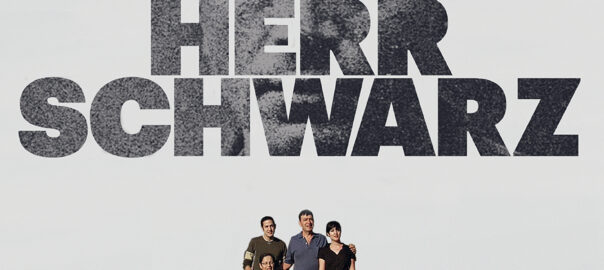
Farewell, Herr Schwarz
Winner of the Best Documentary Prize at the Haifa International Film Festival, director Yael Reuveny’s Farewell Herr Schwarz is a cinematic journey about buried family secrets, the Holocaust (from a third generation perspective) and how it is never too late to reclaim your heritage.
Siblings Michla and Feiv’ke Schwarz survived the Holocaust but never reunited after the war. Michla moved to the soon-to-be-founded Jewish state in the Middle East and started a family there. Her brother Feiv’ke considered dead returned to East Germany, married a German woman and inexplicably lived amidst the concentration camp ruins where he was once a prisoner. The Israeli and German sides to the family lived unaware of each other for half a century until first time filmmaker Yael Reuveny probed exactly what happened to her family in 1945.
The Lesson
After 200 driving lessons and numerous failed tests, Egyptian born Layla is about to give up on her dream to drive. An encounter with Nimer, a Palestinian driving expert, rekindles her hopes. Gradually, the car turns into a “confessional,” and Layla shares her secret life story.
Mom, Dad, I’m Muslim
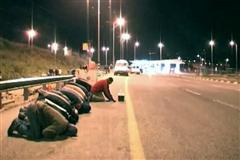
443
Highway 443 begins at the shore and ends in Jerusalem; therefore it has always been a main axis, important in terms of geography, security and spirituality. The film focuses on the small moments that make up life surrounding the highway.
52/50
A documentary film which deals with the violence of Immigration Police and the situation of foreign workers in Israel.
After The Storm
A feature documentary, After The Storm captures the lives of the kids and crew as they turn a gym into a theater, come together as a company, and create hope and purpose in the midst of devastation and despair. After the Storm is a feature length documentary that follows the production of the musical Once On This Island at the St. Mark’s Community Center in New Orleans as it moves from the first round of auditions to the opening night performance and then on to a sold-out Off Broadway theater in New York City. The film explores the cultural landscape of New Orleans as seen through the eyes of a dozen teenage actors. As this creative journey unfolds, the young actors open up their hearts and homes to the film crew and reveal their personal stories of day-to-day survival in present-day New Orleans. It is from their perspective that we see this unique American city still struggling to piece itself back together two years after the hurricane. An emotional and entertaining experience celebrating the spirit and culture of New Orleans, this film is about how the power of story can bring a community together. The focus of the film is not on the storm’s devastation, but rather on how these “storm-tossed” teens are moving on with their lives after having lost everything. After the Storm documents the story of a people and a city that is beginning to piece itself together. The theatre project provided the kids with a unique experience and gave them the kind of professional training that is not readily available in New Orleans. But more than that, it created the opportunity for them to share their point of view and their stories while focusing on something other than just their day-to-day survival and allowing them to grow as individuals and shine as performers.
It’s Better to Jump
The Northern port city of Acco (Acre) is a mixed (Jewish-Arab) city. The city’s Palestinian population—both Muslim and Christian, and for the large part “Palestinians of 1948,” who were the residents of Israel when it was granted statehood—has been there for generations. As Acco has become an increasingly-popular tourist destination, however, there has been a concerted push to change the long-standing demographics, resulting in a government-backed push to move Palestinians out of the Old City. In the hands of the filmmakers, a traditional rite of passage in Acco, the act of jumping from the ancient 40-foot seawall, becomes a metaphor for the perilous situation and great bravery of the city’s Palestinian population. A tough, deeply empathetic film that may suggest uneasy parallels between subtler gentrification, as we know it, and actual forced relocation.

Ameer Got His Gun
Unlike the majority of 18 year old boys in Israel, for whom army service is mandatory, Ameer is exempt from military service under the assumption that his enlistment might endanger Israel’s security. That is because Ameer, An Israeli citizen, is a Muslim Arab. And yet, Ameer decides to volunteer. He believes that his induction is the way to equality, he believes this is the way to belong to the state he lives in, the state he wants to love. Ameer is setting a voyage to civic and self definition, while carefully navigating the thin line between Jewish and Arab societies. Being an eternal optimist Ameer wishes to be both a proud Arab and enthusiastic Israeli while his only enemy is reality.