Tal is 17 years old. Naim is 20. She’s Israeli and he’s Palestinian. She lives in Jerusalem and he lives in Gaza. They both live their lives until one day a bottle is thrown in the sea.

Tal is 17 years old. Naim is 20. She’s Israeli and he’s Palestinian. She lives in Jerusalem and he lives in Gaza. They both live their lives until one day a bottle is thrown in the sea.
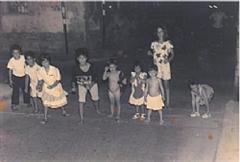
Thirteen year old Aharon Ninio, the only child of parents who are unable to conceive again, is determined to win the honor of carrying the Torah scrolls on Simhat Torah. The belief that he who carries the Torah may ask God for anything on behalf of others can elevate Aharon’s status in the neighborhood and win his distant father’s approval and love. But after Aharon wins the honor, his achievement brings ancient tensions to the surface: his father Bezalel is sure that it’s a sign from God and now his wish to have another child will come true; whereas his mother Rosa, having endured six miscarriages, is unwilling to mourn another loss. Aharon is torn between his parents’ conflicting wishes, when in fact all he wants for himself is to be loved by Aliza, the most popular girl in the neighborhood. His tension becomes unbearable and on the night of the honorary round, the Torah slips from his hands and shatters on the ground. Aharon’s public disgrace is an unbearable insult to his father, who refuses to forgive Aharon despite pleas from Rosa and the Rabbi, and leaves home. Aharon begins fasting to atone for the dropping of the Torah, but upon his father’s abandonment, his fast grows longer and more dangerous, as he refuses to stop even at the price of endangering his life.
The film is set in the near future, and it looks back at the story of two businessmen – one Palestinian and one Israeli – who struggle to set up a solar energy company. Both come from societies where there is strong opposition to cooperating with the other, and the film tells how they overcome hostility from within their own families and from the people around them. In the end, they mount a Facebook campaign that impacts both their joint venture and ultimately changes the political map.
.jpg)
Uri, an easy-going handsome 50 year-old man, left the kibutz 20 years ago and moved to Tel Aviv, but still insists to live his life in his apartment building as if it was a sharing community. His small garden in the entrance of the building is perfectly groomed, and his relationship with the neighbors is warm. Menachem, a lawyer who owns a few apartments in the building, yearns for years to destroy the garden and make it into a parking space. Today is “Tu Be Shvat” (an Israeli holiday which celebrates agriculture), and Uri succeeds in spreading a little holiday spirit amongst the neighbors.

In a city where everything is possible, a guy and a girl are looking for the impossible — a parking space! The night begins when two strangers meet in a bar and want to spend the evening together but can’t find a parking place. This predicament quickly turns into an all night road-trip with various characters and surprising events – a trip in which they must face each other (and confront themselves) as an absurd situation unfolds.

This is the personal journey of the director who leaves her Arab-Muslim village and moves to Tel Aviv. While searching for an apartment, she encounters discrimination by most landlords because of her Arab origins. She finally finds an apartment, and meets her neighbor – Jonathan, a Jewish-Canadian man who immigrated to Israel. A love story ensues. Ibtisam joins a left-wing political party (Meretz) and runs for the Knesset. On New Year’s Eve 2009, Israel invades Gaza. Hundreds are killed. Ibtisam resigns from her party because of its support of the War. She struggles over her Palestinian identity, but does not relinquish her relationship with Jonathan. Yet something has gone sour. Jonathan’s family refuses to meet his girlfriend. Jonathan says: “They can’t forgo their image of their future daughter-in-law – Jewish, white and English-speaking.” Ibtisam is also unable to reveal her relationship to her mother. One day, Jonathan’s grandfather comes from Canada on a nostalgic trip to Kibbutz Ein-Dor, which he helped found in 1948. Ibtisam and Jonathan join him. It becomes an individual journey for each one of them – one that takes them back in time and into the unknown, to memories and dreams, Nakba and independence, love and hate, longing and loss.

Transit begins and ends in an airport during a father and son’s transit flight from Tel Aviv to Manila. It tells the story of Moises, a Filipino single-dad working as a caregiver in Herzliya, Israel, who comes home to his son Joshua’s 4th birthday. It was on that day that Moises, together with their Filipino neighbors, Janet and her daughter Yael, find out that the Israeli government is going to deport children of foreign workers. Afraid of the new law, Moises and Janet decide to hide their children from the immigration police by making them stay inside the house.
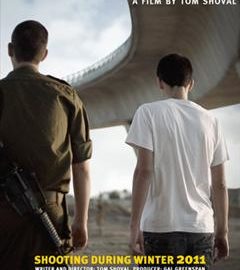
Yaki and Shaul are two teenage brothers who share a strong, almost telepathic connection.
The brother’s family is suffering from an overgrowing debt which led to a deep depression of their father. The brothers feel that they can’t just stand on the sidelines while their family falls apart.
Up until now they were helpless, but now with Yaki’s enlistment to the army, like every other 18 year old Israeli boy, he is given a rifle.
This rifle gives the brothers the power they need to act and from helpless teenagers they become men.
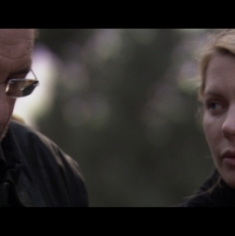
Ilan, an astrophysics professor, is married to the younger and very beautiful Naomi. One day, he finds out that his wife has a lover… A film about guilt, love and unlimited devotion. Based on the best-selling novel by Edna Mazya, one of Israel’s most successful playwrights.