Maya (Netta Shpigelman) is a happily married mother of two. She is a successful choreographer, and everything seems to be perfect, but this life is a lie. Unbeknownst to her family, and everyone around her, she has a hidden past.
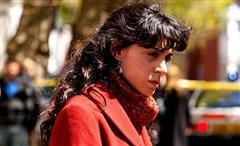
Maya (Netta Shpigelman) is a happily married mother of two. She is a successful choreographer, and everything seems to be perfect, but this life is a lie. Unbeknownst to her family, and everyone around her, she has a hidden past.

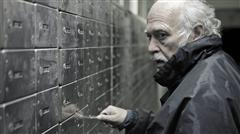
One night, one apartment and one mystery. Rami takes his dog on a walk and disappears. His wife, Shir, wakes up in the middle of the night, clueless as to his whereabouts. Friends, relatives, neighbors and police come round and, with each visit, more marital secrets are revealed. Could one of them hold the key to the mystery? Set entirely during one rainy night, The Man in the Wall is a tense, methodically paced psychological drama with a personal touch.
Across from the municipal music hall in Bat-Yam, there is a large, run-down concrete building. It was built as part of the public housing project in the 50s, and most of the tenants have been living there since. The gap between the two buildings is so much larger than the actual distance.

Amos Oz chronicles his childhood in Jerusalem at the end of the British Mandate for Palestine and the early years of the State of Israel, and his teenage years on Kibbutz Hulda. As a child, he crossed paths with prominent figures in Israeli society, among them Shmuel Yosef Agnon, Shaul Tchernichovsky, and David Ben-Gurion. One of his teachers was the Israeli poet Zelda. Joseph Klausner was his great-uncle. Told in a non-linear fashion, Oz’s story is interwoven with tales of his family’s Eastern European roots. The family’s name was Klausner. By changing the name to a Hebrew one, Oz rebelled against that European background while affirming loyalty to the land of his birth.
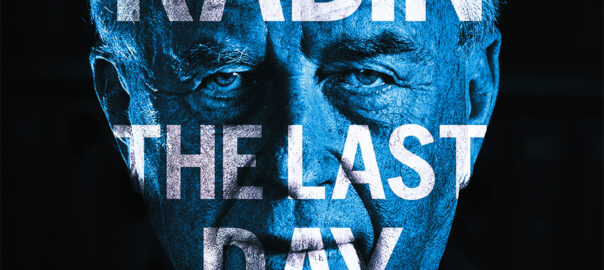
For many Israelis, the assassination of Prime Minister Yitzhak Rabin in 1995 marked a grim turning point for their country. In the words of the commission set up to investigate the murder, “Israeli society [would] never be the same again. As a democracy, political assassination was not part of our culture.” In the eyes of even more people, the murder ended all hope for the Israeli-Palestinian peace process through the Oslo Accords and altered the course of history. But, as Amos Gitai sets out to prove in his brave and provocative new film, Rabin’s assassination was not just the act of one fanatic; it was the culmination of a hate campaign that emanated from the rabbis and public figures of Israel’s far right.
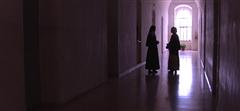
Efrat, a religious woman who grew up in the secular world, is married to a young rabbi and raising three small daughters. Curiosity draws her to the walled garden of the St. Clare monastery in Jerusalem, where befriends a number of the nuns there and tries to get a sense of the women they are under their severe black and white dress, their faith and their life’s mission. Then, a dramatic and unforeseen event changes Efrat’s life irreversibly. After a year of absence she returns to the monastery, hungry for the spiritual calm she sought there in the first place. A gentle story of women reaching out to one another across an almost unbridgeable gap of age, history, culture and religion.
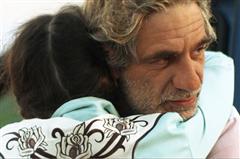
Is That You? is the story of Ronnie, 60 year old Israeli film projectionist, who has been fired from his job and is going now to the U.S. in a search for Rachel, the love of his youth Is That You? Is a romantic, road trip journey to ‘The Road Not Taken’ in life created by Award Winning filmmaker Dani Menkin (HBO Cinemax-39 Pounds of Love, Je Taime, I Love You Terminal, Dolphin Boy).
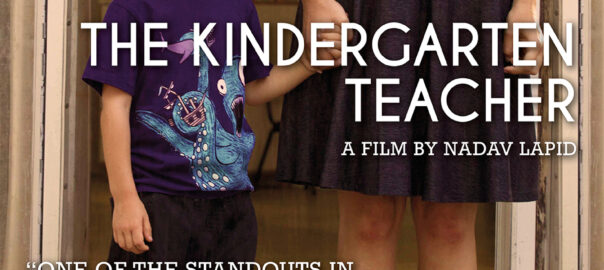
Nadav Lapid’s The Kindergarten Teacher is the story of a teacher who becomes at first enchanted, and then ultimately consumed by the poetic genius of her five-year-old student. As the titular protagonist, Nira, discovers that her young student, Yoav, has an otherworldly talent for language and poetry, she slowly and progressively becomes interested in cultivating the boy’s gift. But when fascination morphs into obsession, Nira pushes the boundaries of her relationship with the boy and his family in an attempt to protect his talent before he passes from boyhood to adolescence, and his purity is lost.
Following his critically acclaimed debut Policemen, Lapid demonstrates the aesthetic vision of a true auteur, combining a verite approach with thrilling a cinematic narrative that brings into sharp focus the dangers of both mediocrity and passion.
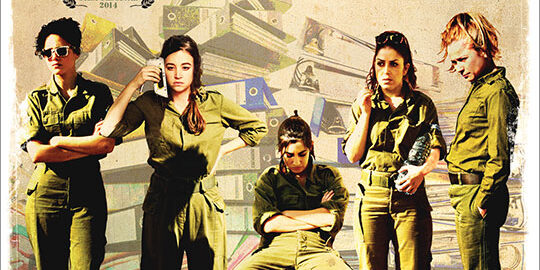
A smash hit in Israel and winner of the Best Narrative Feature Award at the Tribeca Film Festival, Zero Motivation is a unique, sharply observed, sometimes dark and often hilarious portrait of everyday life for a unit of young, female soldiers in a remote Israeli desert outpost. Playing out like M*A*S*H meets Orange is the New Black, Talya Lavie’s brilliant debut details the power struggles of three women with different agendas and very little to do.
Pencil-pushers in the Human Resources Office, best friends Zohar (Dana Ivgy) and Daffi (Nelly Tagar) spend their time playing video games, singing pop songs, jousting with stationery and dreaming of Tel Aviv. The indolent twosome are watched over by their aspiring senior officer, Rama (Shani Klein), who dreams of a higher position and a significant military career, but with a platoon of unskilled, idle, female soldiers without any drive under her charge, her ambitions for promotion are constantly thwarted. With shifts of tone that go from slapstick to satiric to horrifying with fluid ease with a superb supporting cast of characters.
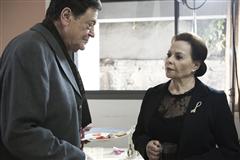
An eighty-year-old man’s body is found with three stab wounds to the chest and a number tattooed along his forearm. Amnon, a police detective and second generation Holocaust survivor, is reluctantly assigned to the case. As the plot weaves between the past and present, their stories unfold.